How Ultra-Thin Porcelain Veneers Improve Tooth Shape, Colour, Alignment and Smile Symmetry Without Conventional Extensive Enamel Reduction in Suitable Cases
A beautiful smile often depends on more than having perfectly white teeth. The shape, color, and alignment of the teeth all play a significant part in your appearance. However, many people avoid considering cosmetic dental solutions because of fears of excessive tooth enamel removal. Ultra-thin porcelain veneers are an alternative solution that appropriate patients can use to address multiple visible dental problems. These delicate restorations can improve several visible dental imperfections while preserving more of the natural tooth structure.
Depending on individual dental needs, they require either no or minimal enamel preparation. It makes them a desirable option for those patients who want to have a natural-looking smile enhancement. No-prep and minimal-prep veneers for natural smile enhancement concentrate on changing the teeth that are already there but make them more beautiful. With proper planning and examination, it is possible to use ultra-thin veneers to create a balanced, brighter, and more harmonious smile without conventional extensive enamel reduction in appropriate cases.
This blog explores how ultra-thin porcelain veneers work, their cosmetic benefits, suitability, enamel preservation, treatment planning, and long-term maintenance.
What Are Ultra-Thin Porcelain Veneers
Ultra-thin porcelain veneers are fragile and are fabricated precisely to fit on the front surface of one’s own natural teeth. Most often, these are crafted from fine-quality dental porcelain that bears similarity to natural tooth enamel.
Unlike conventional veneers, there are a few ultra-thin varieties that need minimal or no tooth preparation at all. There are certain instances when dentists can even apply such veneers without stripping off enamel. However, this approach is not suitable for every patient.
Porcelain also reflects light in the manner of natural teeth. This creates a realistic result rather than an unnatural and artificial-looking finish.
How Veneers Improve Tooth Shape and Proportion
Teeth shape has an important function in achieving an aesthetically pleasing smile. Too short, too thin, uneven, and worn teeth can influence the overall symmetry of the mouth.
Ultra-thin porcelain veneers can enhance the proportions of the teeth by applying a precisely crafted layer to the exposed tooth surface.
Some possible ways to change teeth shape with porcelain veneers are:
- Make short-looking teeth appear slightly longer.
- Improve the appearance of uneven edges.
- Create more consistent tooth widths.
- Restore the appearance of minor chips.
- Refine irregular or asymmetrical contours.
The dentist considers the face’s proportions, lip movements, and the natural alignment of the other teeth before creating the veneer.
The goal is not to make all teeth alike. Instead, the objective is to create harmony between the restorations and the facial features.
Improving Tooth Colour Without an Artificial Appearance
Tooth discolouration can develop due to the effects of ageing, poor dieting, smoking, and certain medications. Some of these stains may be visible even after undergoing professional whitening treatments.
Another alternative for improving tooth colour is the use of ultra-thin porcelain veneers. The thin layer of porcelain material can mask certain types of stains and provide a brighter appearance.
Patients can select a shade that complements their complexion and natural features. A dentist can help determine an appropriate colour based on the desired result.
Porcelain is more resistant to staining compared to natural enamel. Nevertheless, other teeth remain subject to staining from external factors.
For this reason, shade selection requires careful consideration. An excessively white finish may look unnatural, especially if it does not harmonise with the overall appearance of the patient.
Creating Better Smile Symmetry Through Personalised Planning
A symmetrical smile tends to appear harmonious and natural. However, slight discrepancies in the length, width, shape, and positioning of teeth can alter the appearance of a symmetrical smile. Dentists perform a comprehensive evaluation to determine how each tooth impacts smile symmetry.
Custom veneer shade, shape and smile symmetry planning involves consideration of various essential aspects:
- Facial shape and proportions.
- Natural tooth dimensions.
- Gum line position.
- Width and curvature of smile.
- Color and translucency of teeth.
- The relationship between upper and lower teeth.
Digital photographs, impressions, and smile design techniques are involved in the process. This helps dentists develop restorations that blend with the patient’s natural aesthetics.
The ultimate design must be one that complements the natural smile rather than making it overly uniform.
Can Ultra-Thin Veneers Improve Minor Alignment Issues
Not everyone who wants a more aligned smile needs to undergo orthodontic procedures. There are some who only have slight issues with their teeth, which primarily concern the aesthetics of their front teeth.
In selected cases, no-prep and minimal-prep veneers for natural smile enhancement can create the visual impression of better alignment through the adjustment of contours and proportions.
However, veneers do not reposition the teeth or address the root cause of any bite-related issues. Severe cases of crowding, rotations, and misalignment might require orthodontic treatment.
A proper examination helps to determine whether cosmetic contouring is the right course of action or whether a different procedure should be considered.
Enamel Preservation and the Importance of Tooth Preparation
One major advantage of ultra-thin veneers is the possibility of preserving more natural enamel.
Conventional veneer procedures often involve removing a controlled amount of enamel to create sufficient space for the restoration. However, selected ultra-thin veneers can require significantly less preparation.
Enamel preservation and tooth preparation for dental veneers depend on many factors related to the clinical situation.
These include:
- Existing tooth position and thickness.
- Natural enamel condition.
- The amount of additional volume required.
- Bite alignment and functional forces.
- The type and thickness of porcelain selected.
No-preparation treatment is not always the optimal choice. Adding veneers with insufficient room can make teeth appear bulkier or negatively impact gums.
Therefore, minimal preparation can sometimes yield a better outcome. The dentist must assess each tooth individually before recommending treatment.
Who May Be Suitable for Porcelain Lumineers
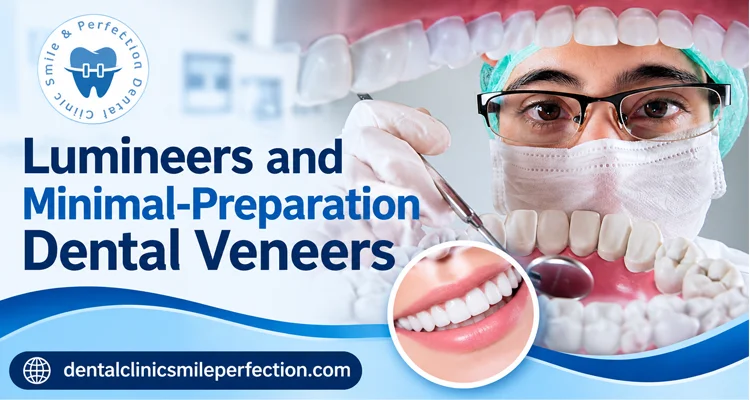
Porcelain Lumineers are an example of an ultra-thin veneer that can help enhance the look of natural teeth without necessarily needing much tooth preparation.
They may be considered for patients with minor cosmetic issues, assuming that their teeth and gums are healthy.
Lumineers eligibility for stained, chipped and uneven teeth depends on the severity of each concern and the existing tooth structure.
Potential candidates may include individuals with:
- Persistent tooth staining.
- Small chips or worn edges.
- Mildly uneven tooth shapes.
- Minor gaps between front teeth.
- Cosmetic imperfections that do not affect dental function.
Nevertheless, those with serious crowding issues, heavy tooth staining, gum disease, extensive tooth decay, or specific bite problems should consider other options.
A clinical consultation is essential to determine whether Lumineers or other types of veneers are right for them.
How Long Do Porcelain Veneers Last
Porcelain veneers have the potential to offer long-term cosmetic benefits when properly designed, applied, and cared for. The lifespan of veneers often depends on the quality of materials used, bonding process, oral care, and personal behaviors.
Porcelain lumineers longevity, maintenance and replacement should form part of the treatment discussion prior to embarking on the procedure.
To preserve porcelain veneers, patients need to:
- Brush teeth twice a day with a soft-bristled toothbrush.
- Clean between teeth regularly.
- Attend routine dental examinations.
- Avoid biting on anything hard or tearing packages with teeth.
- Wear a prescribed night guard.
- Limit habits that put unnecessary pressure on the restorations.
Although porcelain is resistant to staining, veneers may chip and get damaged under excessive force. The natural teeth underneath are susceptible to decay and gum disease.
If a veneer becomes damaged or loses its bond, a dentist can assess whether repair or replacement is necessary. Patients should understand that veneer treatment may require future maintenance.
End Notes
Ultra-thin porcelain veneers offer a conservative way to improve tooth shape, shade, slight misalignment issues, and smile symmetry. The fact that these veneers allow one to retain much of their natural tooth structure is what makes them desirable for some people. However, for effective results, it is important to have an accurate assessment and set realistic expectations while creating a customised plan. Not everyone qualifies for no-prep veneers, and there are cases where minimal removal of enamel is necessary. Understanding the available options allows patients to make informed choices regarding their cosmetic dentistry.
If you are considering no-prep and minimal-prep veneers for natural smile enhancement, consult an experienced dental professional like us at Smile & Perfection Dental Clinic. We provide exceptional dental care for patients who are looking for options to enhance their smiles. Visit our website now to learn more about the clinic and our services.
FAQs
- Are ultra-thin porcelain veneers suitable for everyone?
No, they are most appropriate for individuals with good oral hygiene and those with minor cosmetic issues. In this case, a dental examination can help to determine your eligibility.
- Do ultra-thin porcelain veneers require enamel removal?
Not always. Some veneers do not require any enamel removal, while other types only require minimal removal depending on tooth position, thickness, and desired cosmetic results.
- Can porcelain veneers correct crooked or uneven teeth?
They can enhance the appearance of mildly uneven or slightly crooked teeth. However, significant alignment problems may require orthodontic treatment.
- How can I maintain porcelain veneers for longer?
Brush twice a day, floss regularly, have dental checkups, and refrain from biting into hard objects. A night guard is recommended for protection against grinding.